Does Where You Live Affect Your Indian e-Visa Approval? A State-by-State Look at Application Patterns for US Travelers
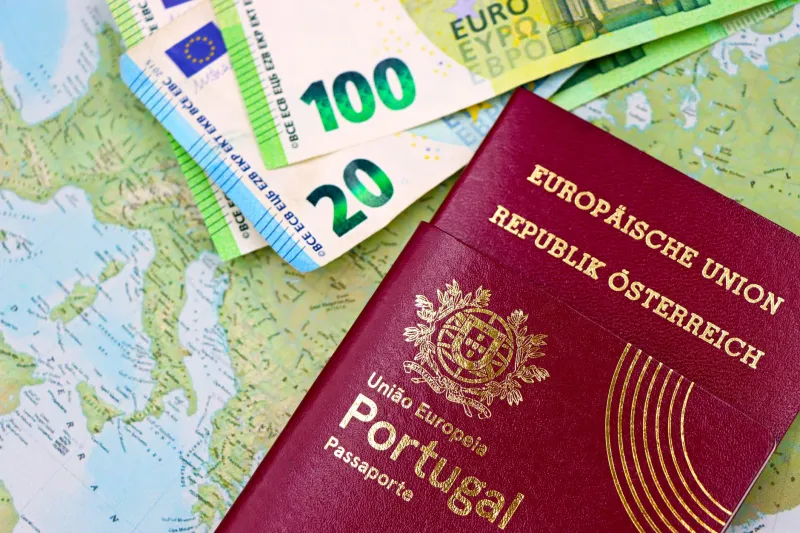
On paper, the Indian e-Visa system treats every eligible US passport holder identically. The same eligibility requirements, the same documentation checklist, and the same government processing queue apply whether an applicant submits from Manhattan or rural Montana. Yet among immigration professionals, frequent travelers, and visa facilitation services, a persistent question has emerged: do US applicants from certain states or regions face higher rates of denial or complication than others?
The answer is nuanced — and worth understanding before you submit your application.
Why Geography Might Matter at All
The Indian government does not publish granular approval statistics broken down by US state, county, or metropolitan area. Any discussion of regional patterns therefore draws on indirect evidence: aggregated data from visa facilitation companies, anecdotal reporting from immigration attorneys, and the documented experiences of travelers across online communities.
With that caveat clearly in place, several factors emerge that could plausibly create regional variation in application outcomes — none of which involve the government explicitly targeting applicants by location, but all of which reflect real differences in how applications are prepared and submitted across the country.
The Documentation Consistency Factor
One of the most frequently cited variables among visa professionals is documentation quality — specifically, the consistency and clarity of supporting materials that applicants include with or reference in their applications.
US travelers in major metropolitan areas — New York, Los Angeles, Chicago, Houston, and the San Francisco Bay Area — tend to have greater access to professional immigration support services, international travel agencies with India-specific expertise, and large Indian-American communities whose members can offer firsthand guidance. This informal knowledge network can meaningfully improve application quality.
By contrast, applicants in rural states or smaller metropolitan areas may be preparing their applications with less local support infrastructure, relying entirely on online resources of varying reliability. When an application contains a documentation inconsistency — a name that appears differently on a passport versus a supporting document, or travel dates that create logical questions — the absence of a knowledgeable reviewer before submission increases the chance that the error reaches the processing queue uncorrected.
This is not a flaw in the system; it is a reflection of uneven access to preparation resources across the country.
The Dual-Nationality and Immigration History Variable
Certain US states have higher concentrations of naturalized citizens — individuals who were born outside the United States, obtained US citizenship, and now hold only a US passport. For Indian e-Visa purposes, this population warrants particular attention.
US citizens who were born in Pakistan, Bangladesh, or certain other countries may face additional scrutiny or different processing pathways under Indian immigration policy, regardless of their current citizenship. The Indian e-Visa system asks applicants to disclose their country of birth, and this disclosure can affect processing outcomes in ways that have nothing to do with the applicant's current nationality.
States with large South Asian immigrant populations — New Jersey, California, Texas, Illinois, and Michigan among them — naturally have higher concentrations of US citizens whose birth country may trigger additional review. Travelers in this category are not necessarily at a disadvantage, but they should be prepared for a longer processing window and should ensure that all disclosures on their application are complete and accurate.
Passport Issuance Locations and Administrative Flags
Another variable worth examining is passport issuance history. US passports are issued through a network of passport agencies and acceptance facilities distributed across all 50 states. While passport quality is federally standardized, some immigration professionals have noted that applications submitted with passports containing extensive international travel history — including prior visits to countries that India monitors closely for security reasons — can result in extended processing times.
This factor is not strictly geographic, but it correlates loosely with geography: travelers based in border states, major international gateway cities, or states with large military and government contractor populations may carry passports with travel histories that prompt additional administrative review.
Application Platform and Submission Timing
Regional patterns also emerge in how and when applications are submitted. West Coast applicants, operating in the Pacific Time Zone, often submit applications later in the US business day — which, given India's time zone (IST is 10.5 to 13.5 hours ahead of US time zones), means their applications may enter the processing queue at different points in India's administrative day than applications submitted by East Coast travelers.
While this timing variable is unlikely to affect ultimate approval outcomes, it can influence processing speed — a meaningful consideration for travelers with tight departure windows.
What Applicants in Every State Can Do
Regardless of where in the United States an application originates, several practices consistently improve approval outcomes:
Verify name consistency across all documents. The name on the e-Visa application must match the name on the passport exactly, including middle names and suffixes. Discrepancies — even minor ones — are a leading cause of avoidable rejections.
Disclose travel history accurately and completely. The application asks about prior visits to India and travel to certain other countries. Complete, honest disclosure is essential. Inconsistencies between disclosed history and passport stamps create problems.
Use a compliant photograph. Photo rejections are among the most common technical causes of application failure. The Indian government's photo specifications are specific regarding background color, facial coverage, and image resolution.
Apply well in advance. A two-to-four-week application window allows time to address any issues without pressure. Last-minute applications leave no margin for correction.
Review the application before submission. A second pair of eyes — whether a knowledgeable friend, a travel agent, or a professional service — catches errors that applicants often miss when reviewing their own work.
The Bigger Picture
The Indian e-Visa system is designed to be accessible and efficient for eligible travelers worldwide. Regional variation in US approval outcomes, to the extent it exists, is almost entirely a function of application preparation quality rather than any geographic bias in the system itself. US travelers who submit complete, accurate, and well-documented applications — regardless of their home state — give themselves the strongest possible foundation for approval.
For travelers who have experienced a denial or are navigating a complex application scenario, India Visa Guide recommends consulting with an immigration professional familiar with Indian visa requirements before reapplying. A careful review of the original application often reveals the specific issue — and the specific fix — that makes the difference on a second attempt.